
Social & Emotional Learning · Ages 6–12
Give your child the skills to navigate life - from the inside out.
Resilience. Curiosity. Emotional intelligence. Independence…
These aren’t personality traits — they’re learnable skills. The Brain Crew teaches them through animated stories children will actually remember.
Day 1 free. Full kit $69.99 one-time·
Parent and Teachers track included.
Day 1 free | Brain-based SEL curriculum | Builds executive functions | Ages 6–12 Parent + child tracks
WHY THESE SKILLS. WHY NOW.
Your child will spend their whole life managing their mind. Who teaches them how?
Schools teach mathematics, history, grammar. But the skills that determine whether a child thrives — their ability to regulate emotions, persist through difficulty, manage their attention, stay curious under pressure — are rarely taught explicitly. Neuroscience says they should be. And they can be.
Executive functions — the brain’s control tower
Planning, organising, starting tasks, managing time, controlling impulses. These are executive functions — the cognitive skills that determine how well a child can turn intention into action. They live in the prefrontal cortex, and they develop all the way through adolescence.
“Executive function skills are more predictive of school readiness than IQ. They can be developed through explicit, engaging instruction.” — Harvard Center on the Developing Child
Emotional resilience — bouncing back, not breaking down
Resilience is not the absence of difficulty. It is the ability to feel difficulty fully, understand what’s happening, and return to balance. Children who understand their own emotional responses are significantly better equipped to navigate frustration, failure, and fear.
“Children who can name their emotions are better able to regulate them. Emotional labelling reduces amygdala activation — the brain’s alarm system.” — UCLA Mindful Awareness Research Center
Curiosity for knowledge — the engine of lifelong learning
Curious children learn faster, remember more, and find meaning in difficulty. Curiosity activates the brain’s dopamine system — the same system that drives motivation and reward. When children understand that questions are pleasurable, learning becomes self-sustaining.
“Curiosity-driven learning produces stronger memory consolidation. The brain in a curious state is primed to retain new information far more effectively.” — UC Davis, 2014
Autonomy — doing things for themselves
Independence isn’t given. It’s built, brick by brick, when a child successfully plans their own work, manages their own time, and sees that their effort produces results. Autonomy is the long-term goal of every short-term skill. Children who experience genuine competence want more of it.
“Self-determination theory shows that autonomy is a fundamental psychological need. Children given genuine agency develop higher intrinsic motivation and wellbeing.” — Deci & Ryan, Rochester University
Planning & self-management — turning thoughts into action
The gap between knowing what to do and actually doing it is the central challenge of childhood — and of adult life. Children who learn to break big goals into small steps, manage time with intention, and track their own progress develop one of the most powerful life skills there is.
“Goal-directed planning in childhood predicts academic achievement, social competence, and mental health outcomes in adulthood.” — Moffitt et al., Duke University
Self-awareness — knowing yourself changes everything
A child who can name what they feel, understand why they react, and recognise their own patterns is not just more emotionally intelligent — they are more teachable, more socially confident, and more compassionate. Self-awareness is the meta-skill that amplifies all the others.
“Interoceptive awareness — the ability to sense and name one’s internal states — is directly linked to emotional regulation and decision-making quality.” — Antonio Damasio, USC
We don't lecture children about feelings. We give them metaphors so vivid they use them at dinner, at bedtime, and on the way to school — for years.
THE 5-DAY PROGRAMME.
Five skills. Five stories.
One language your child will never forget.
Each day, Leo, Mia and Sam take your child on an adventure inside their own Brain City. By the end, your child has five metaphors that instantly describe what they feel — and a parent who speaks the same language.
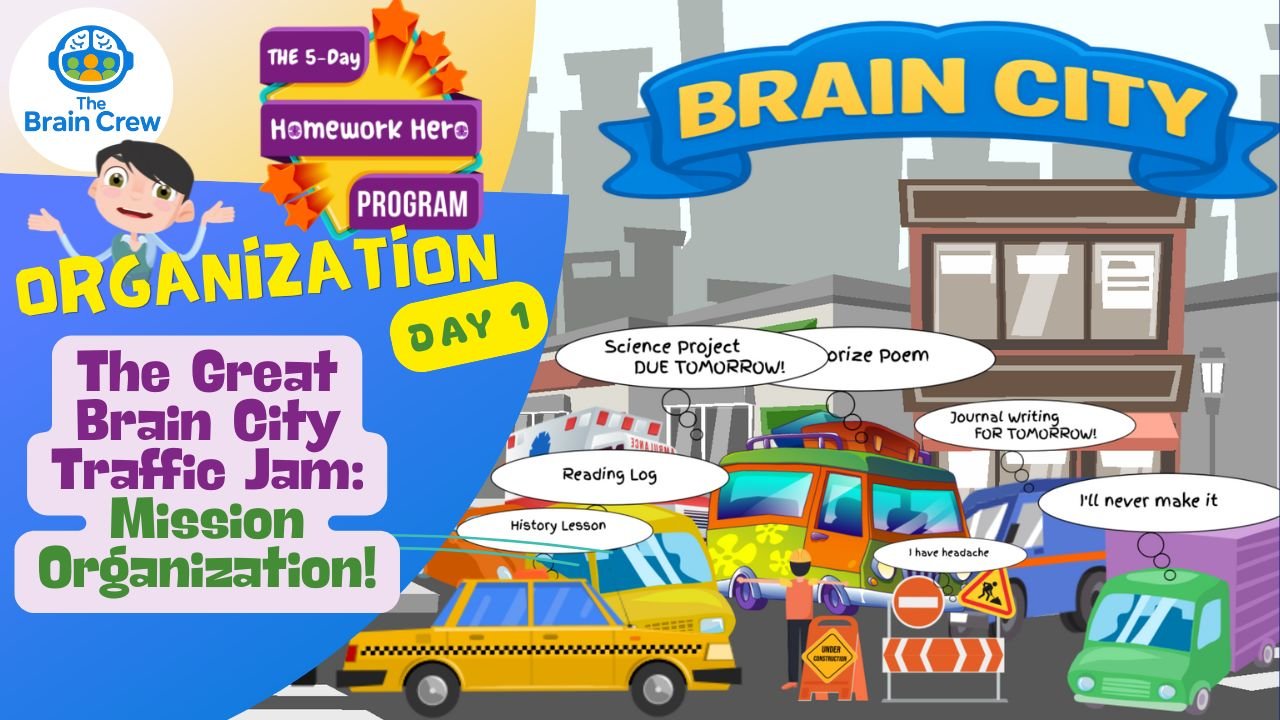
Learn to keep everything in its place for clarity and focus.
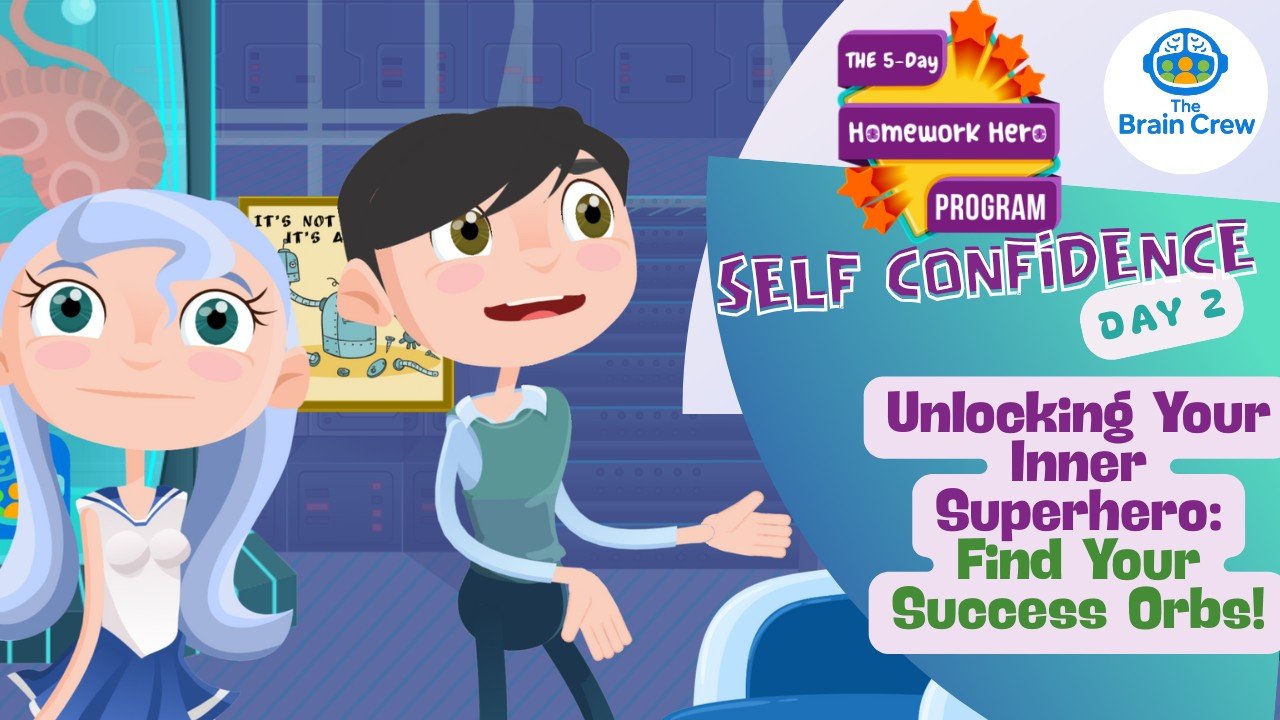
Day 2: The Confidence Reactor
Embrace mistakes and always try again, fostering a resilient mindset.
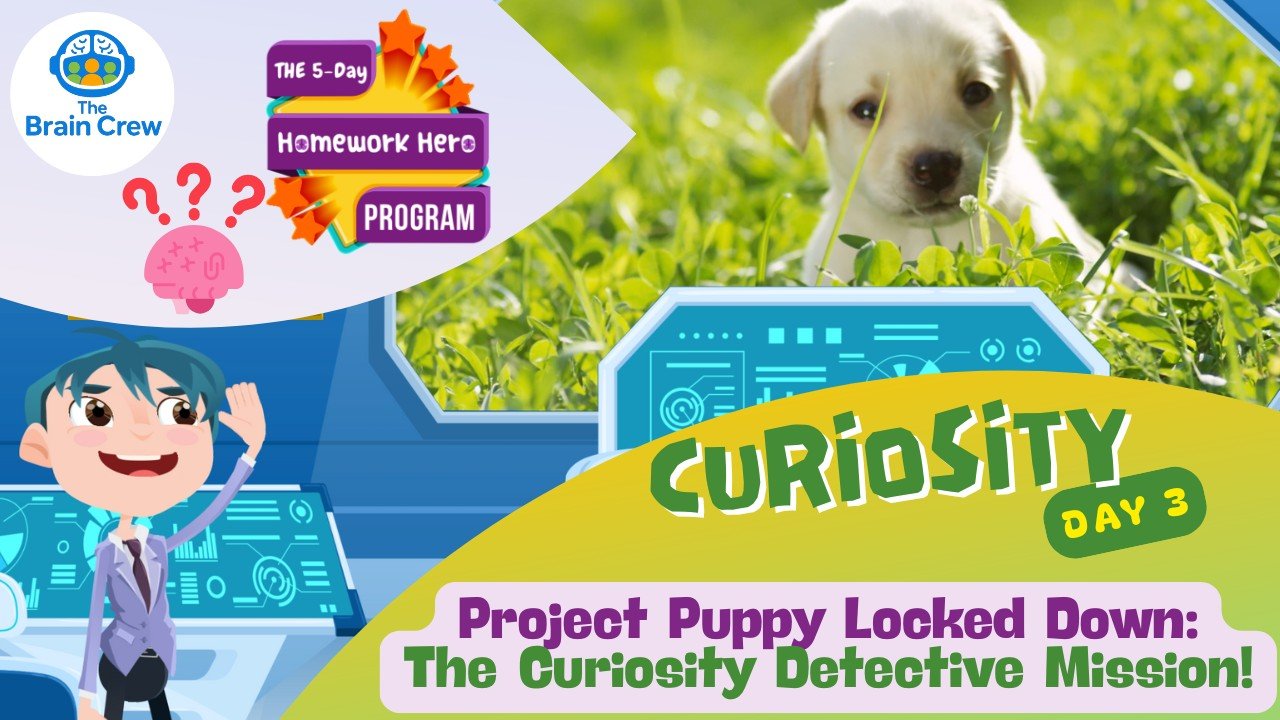
Day 3: The Curiosity Detective
Turn homework into an exciting investigation by asking questions.
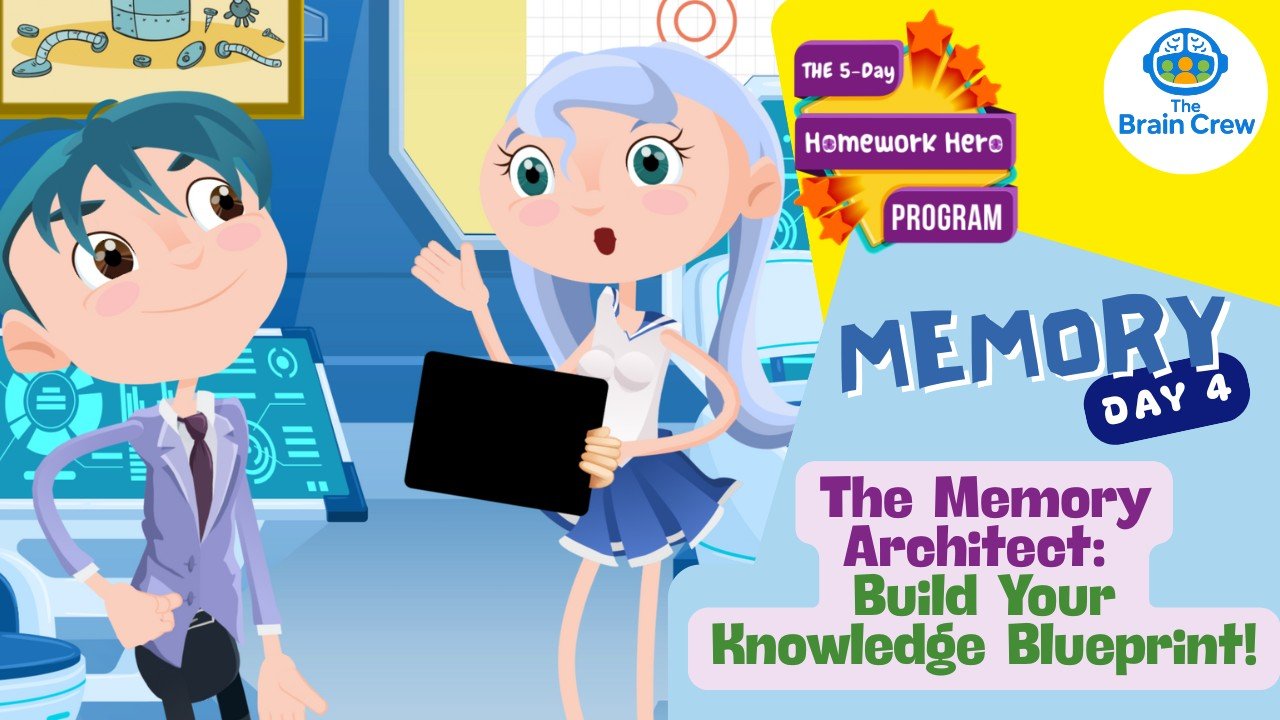
Day 4: The Loose Bricks Memory Factory
Master effective techniques like mind mapping for better recall.
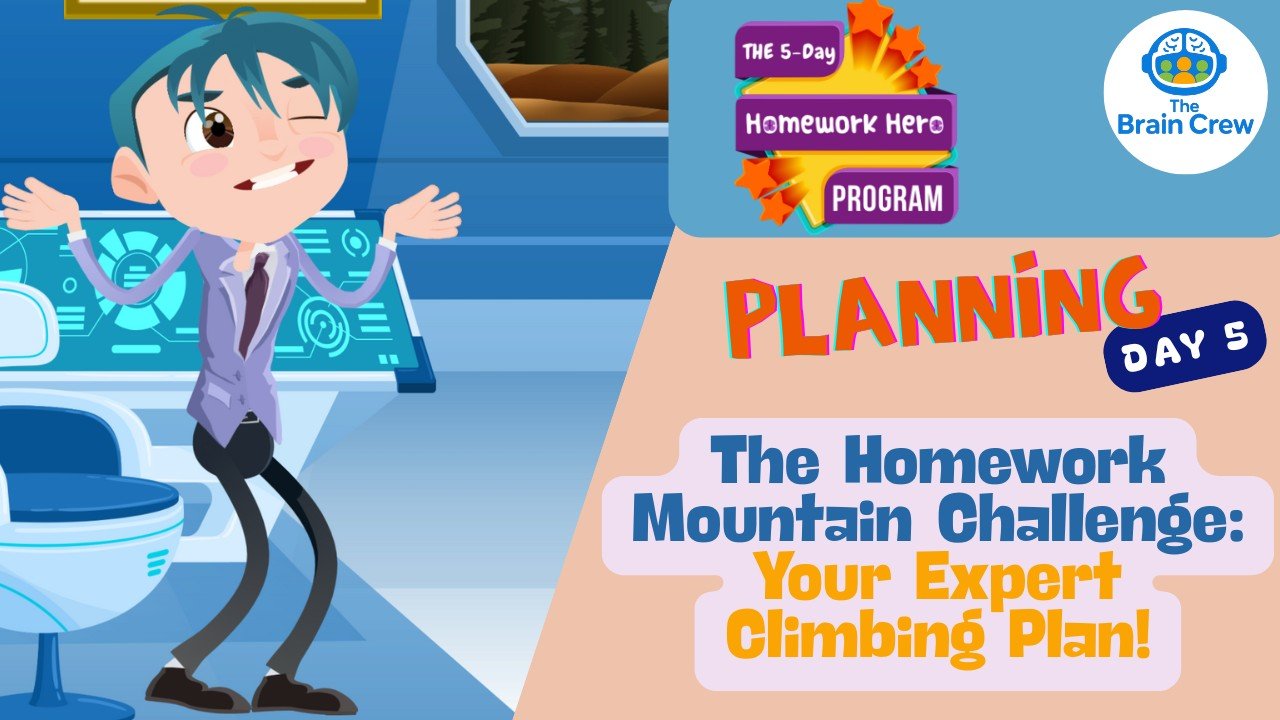
Day 5: The Homework Mountain
Break down big tasks into manageable steps to conquer anything!
Why metaphors work better than lessons. Neuroscience is unambiguous: the brain stores information most durably when it is attached to a concrete, emotionally resonant image. Abstract concepts — “regulate your emotions,” “manage your time” — fade. A vivid story with characters and conflict does not.
The five metaphors work because they are retrievable under pressure. A child who is dysregulated cannot access complex instructions. But they can access metaphors. Simple, vivid, always available.
The parent & teacher track ensures the metaphors survive beyond the screen. Every episode has a mirror for parents and teachers — same concepts, adult language — so you can meet your child inside their own framework instead of pulling them toward yours.
“Narrative-based learning produces significantly stronger memory consolidation and emotional integration than propositional learning. Stories activate the brain’s whole architecture — not just the language centres, but the sensory, motor, and emotional networks simultaneously.”
Zak, P.J. — Neuroeconomics Lab, Claremont Graduate University
Build confidence, planning, and focus with fun, interactive daily adventures.
Learning Begins With Us
At The Brain Crew, we believe every elementary school child holds incredible potential, sometimes just waiting for the right tools to be unlocked. We understand the daily challenges children face – from homework hurdles to
building confidence and developing essential habits. And we know parents often feel caught in the middle, wanting to help but sometimes struggling to find the right, engaging resources.
WHAT’S INSIDE
Your complete success toolkit.
For your child
🎒 What they experience each day
🎬 An interactive video adventure
Leo, Mia and Sam lead your child through Brain City. The video pauses at key moments with questions, choices and challenges — your child is not watching a story, they are inside it.
🎯 Interactive challenges
Hands-on activities that let your child practise the day’s skill — drag-and-drop puzzles, scenario choices, reflection prompts — designed around the competency taught that day.
🏅 A game to win a badge
Each day ends with a game built around that session’s competency. Children who complete it earn a digital badge — a tangible, collectible proof of what they’ve learned and mastered.
📄 A downloadable activity guide
A beautifully illustrated PDF to print and keep — with stickers, motivational posters, templates and worksheets your child can use in real life long after the screen is off.
For parents & educators
👨👩👧 What you receive alongside each day
📋 Teacher’s guide & discussion questions
A structured guide for each episode — whether you are a parent at the kitchen table or a teacher in a classroom. Includes suggested questions to open conversation, activities to extend the learning, and tips for different age groups within the 6–12 range.
🧬 The Parent Decoder
A PDF that maps each episode directly to the executive function neuroscience behind it, plus one concrete home strategy you can use that same evening. Written in plain language — no psychology degree needed.
🎙️ A parent briefing podcast episode
A short audio episode for each day — designed to be listened to while commuting, cooking, or walking. It explains what your child just experienced, why it matters developmentally, and how to bring the metaphor naturally into your week.
🔬 “The Science Behind the Series” audio explainer
A deeper audio resource for educators, therapists and curious parents — citing each Brain Crew metaphor against published neuroscience, naming the research, the institutions, and the mechanisms. One per series, shared across all five days.
The parent and educator resources are not summaries of the children’s content. They are a parallel track — same concepts, different language, designed to be experienced independently so that both parent and child arrive at the same vocabulary from their own direction.
MEET THE BRAIN CREW
Three characters inside your child's Brain City.
Each one a different way of thinking.
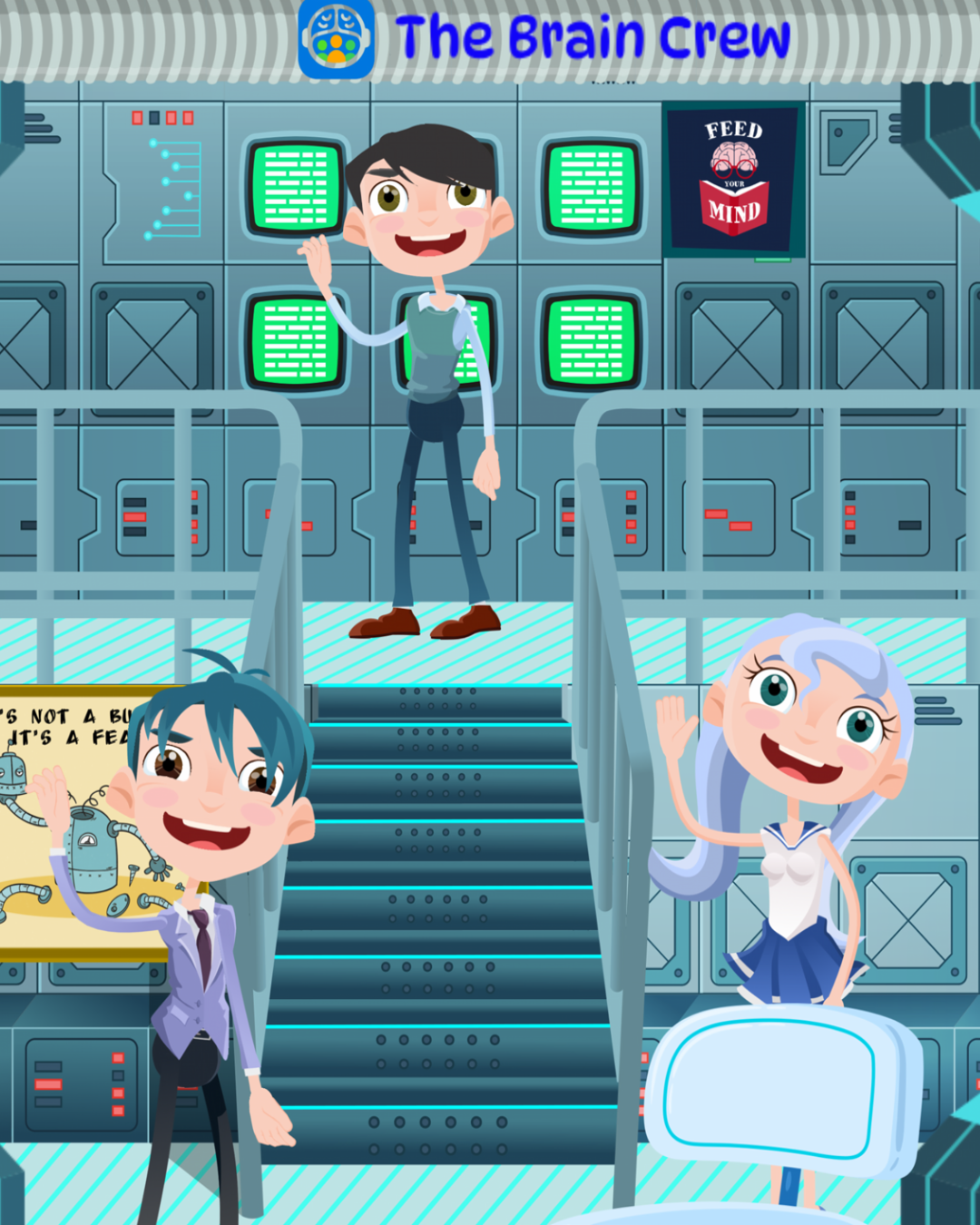
Leo, Mia and Sam are not perfect. They get overwhelmed, make mistakes, and argue about the right approach. That’s the point. Children see themselves in imperfect characters, not in ideals. And they learn by watching those characters figure it out.
Leo - The Strategist
Calm, analytical, always three steps ahead. Leo is the voice of executive function — he sees the Traffic Jam coming, knows how to plan the mountain climb, and insists on understanding before acting. He gives children the language to describe what's happening in their head, without shame.
Mia - The Creative
Inventive, lateral, always finding connections nobody else saw. Mia embodies curiosity as a superpower — she turns every setback into a question, every obstacle into an experiment. She teaches children that the brain that wanders is not a broken brain; it is a brain looking for patterns.
Sam - The Energetic
High energy, impulsive, first-then-think. Sam makes mistakes loudly and recovers visibly. Children who see Sam struggle with impulse control, frustration, and starting tasks recognise themselves — and then watch him find a way through. Resilience demonstrated is more powerful than resilience explained.